Dedicated page content for Chromoly Tubing Welding with practical technical and commercial insights for project and OEM buyers.
Chromoly Tubing Welding supports industrial buyers who need dependable 4130 material quality, fast stock confirmation, and practical delivery timelines.
Our team supports procurement, quality checks, and documentation from first inquiry to final dispatch.
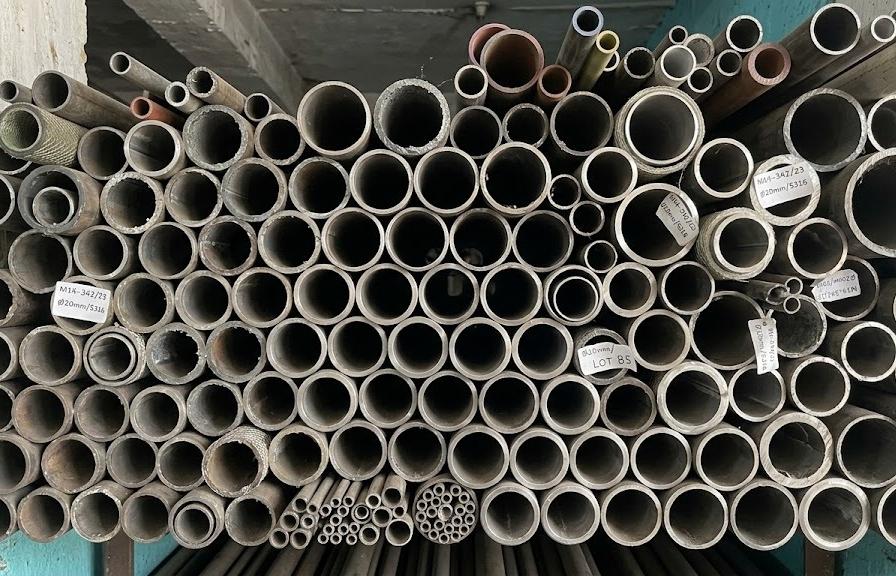
Use qualified welding procedures, suitable filler material, and controlled heat input. Post-weld stress relief may be required for critical service.
Material supplied with clear documentation and inspection support.
Dimension matching and cut length planning for project execution.
Domestic and export shipment support with reliable coordination.
| Topic | Recommended Practice |
|---|---|
| Joint Preparation | Maintain clean bevel and remove oil, scale, and moisture before welding. |
| Filler Selection | Select filler based on required strength and application service condition. |
| Heat Input | Use controlled heat input to limit hardness spikes in heat affected zone. |
| Cooling Control | Avoid rapid quenching; allow controlled cooling for better toughness. |
| Post Weld Treatment | Apply stress relief where design or code requirements demand it. |
4130 Chromoly tubing is widely used in aerospace, motorsport, roll cage fabrication, and structural engineering because of its excellent strength-to-weight ratio and weldability. TIG welding is generally preferred for Chromoly tubing due to precise heat control and high-quality weld results.
Prior to welding, all oils, oxides, and surface contaminants should be removed using mild abrasives and acetone cleaning. Proper fit-up and joint preparation help achieve stronger weld integrity and reduce the risk of defects.
Thin wall 4130 tubing generally does not require preheating, while thicker sections may benefit from controlled preheat and post-weld stress relief depending on service requirements.
| Parameter | Recommendation |
|---|---|
| Welding Process | TIG (GTAW) |
| Current Type | DCEN |
| Shielding Gas | Argon |
| Tungsten Size | 1/16" to 1/8" |
| Preheat Temperature | 400°F - 500°F (when required) |
| Stress Relief | Approx. 1100°F for thicker sections |
Rapid quenching after welding should be avoided as it may increase hardness and cause cracking. Controlled cooling improves weld toughness and long-term performance.
| Specification | ASTM A519 / ASME SA519 |
|---|---|
| Grade | SAE 4130 / AISI 4130 |
| UNS Number | UNS G41300 |
| Material Type | Chromium-Molybdenum Alloy Steel |
| Manufacturing | Seamless / Welded / Cold Drawn |
| Condition | Annealed, Normalized, Cold Drawn |
| Certification | MTC 3.1, Third Party Inspection |
| Density | 7.85 g/cm³ |
| Yield Strength | 460 MPa Min |
| Tensile Strength | 560 MPa Min |
| Elongation | 21.5% |
| Hardness | 95 HRB Max |
| C | Mn | Si | Cr | Mo |
|---|---|---|---|---|
| 0.28-0.33 | 0.40-0.60 | 0.15-0.30 | 0.80-1.10 | 0.15-0.25 |
Chromoly tubing combines lightweight construction with exceptional mechanical strength, making it suitable for critical engineering applications requiring reliability and long service life.
4130 Chromoly tubing is valued for its excellent weldability, fatigue resistance, and superior strength-to-weight ratio, making it a preferred material for demanding fabrication environments.
Yes. TIG welding is widely used for 4130 Chromoly tubing because it provides excellent control over heat input and weld quality.
Thin wall tubing generally does not require preheating, while thicker sections may benefit from controlled preheat depending on application requirements.
ER80S-D2, ER70S-2, and ER70S-6 are commonly used filler materials for Chromoly tubing welding applications.
Thin wall tubing often does not require stress relief, while thicker sections may benefit from post-weld heat treatment for improved toughness.
Yes. Surface oils, oxides, and contaminants should be removed using abrasives and acetone to achieve high-quality welds.
Yes. 4130 Chromoly tubing is widely used for roll cages because of its excellent strength-to-weight ratio and durability.
No. Rapid quenching may cause cracking or increased hardness. Controlled cooling is generally recommended.
Chromoly tubing is commonly used in aerospace, motorsport, automotive, industrial fabrication, and structural engineering.
Continue with material properties, welding guidance, quality controls, and application-focused references.