
4130 Tubing Heat Treatment Guide
Heat treatment decides how strong, how ductile and how machinable a 4130 tube is. The same alloy can be soft enough to swage or hard enough for a highly stressed shaft, depending on the condition it is supplied or finished in.
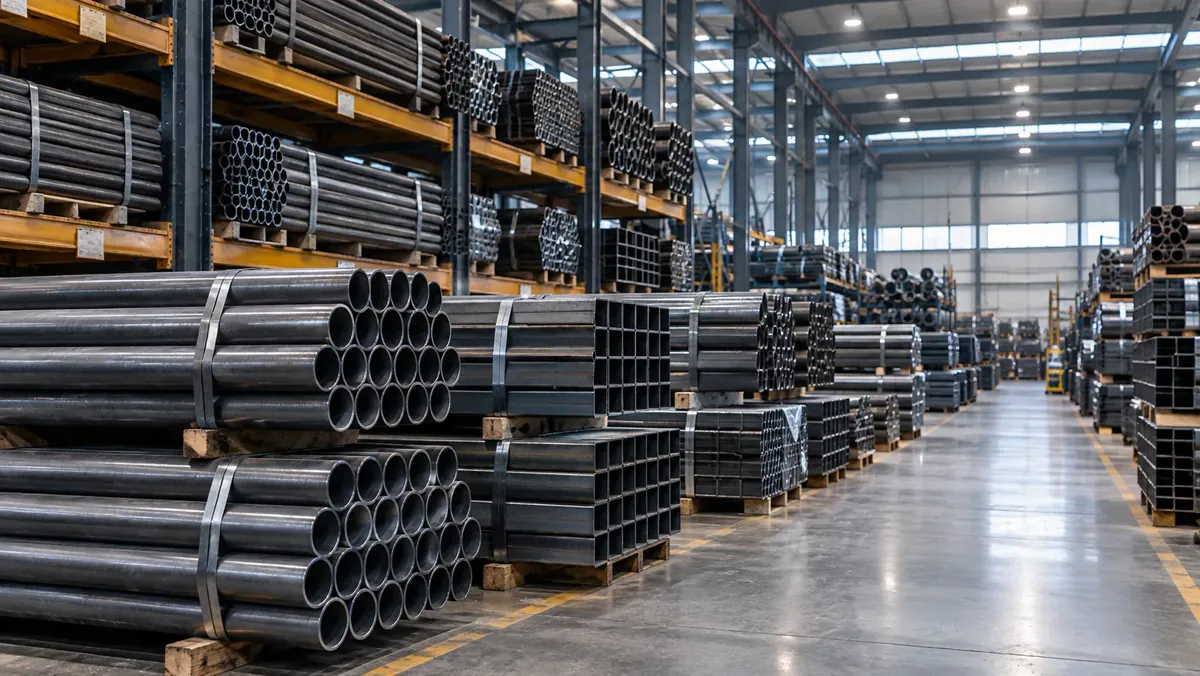
Primary Heat Treatment Conditions
1. Normalized (Condition N): The tube is heated above the critical temperature (~1600°F/870°C) and cooled in still air. This refines the grain structure, removing residual drawing stresses, and provides a uniform, intermediate strength with excellent toughness. Mandatory for aircraft structures.
2. Annealed (Condition A): Heated and cooled very slowly in a furnace. This produces the softest, most ductile state for severe bending or forming.
3. Quenched and Tempered (Q&T): Heated, rapidly cooled (quenched in oil or polymer) to form hard martensite, then reheated (tempered) to dial in the exact balance of high strength and toughness.
Post-Fabrication Treatment
Most 4130 tubular structures (roll cages, bike frames) are welded from Normalized or As-Drawn tubing and put into service without post-weld heat treatment. For highly rigid, complex weld clusters where residual stresses are a concern, a post-weld stress relief (~1100°F/590°C) may be performed to relax the joints without altering the base metal's primary properties.
| Process | Cooling Method | Resulting Properties | Typical Application |
|---|---|---|---|
| Normalizing | Still Air | Uniform grain, moderate strength/toughness | Standard structural, Aerospace |
| Annealing | Slow Furnace | Maximum ductility, lowest strength | Severe bending/forming stock |
| Quench & Temper | Rapid Liquid Quench + Reheat | Highest strength, engineered toughness | High-stress machined parts |
| Stress Relief | Air cool from sub-critical temp | Relaxes weld stress, retains base properties | Complex welded clusters |
Conditions Compared
| Condition | What is done | Result | Typical use |
|---|---|---|---|
| Annealed | Heated and cooled slowly | Softest, most ductile | Machining, forming, parts to be heat treated later |
| Normalized | Heated and cooled in air | Uniform structure, good strength and weldability | Welded frames, cages, aircraft structures |
| Stress relieved | Heated below the transformation range | Residual stress reduced, strength largely kept | Precision machined parts, after welding |
| Quenched and tempered | Hardened, then tempered | Highest strength, set by tempering | Highly loaded machined components |
Choose the condition from what happens to the tube next. If it will be welded into a structure, use normalized. If it will be machined and then hardened, use annealed. If it must stay straight through machining, consider stress relieved. Each condition has its own page: normalized, annealed, stress relieved and quenched and tempered.
Frequently Asked Questions
Can I heat treat 4130 with a torch?
A rosebud torch can be used for pre-heating or rudimentary localized post-weld stress relief (heating to a dull red and cooling slowly). However, true normalizing, annealing, or Q&T requires precise temperature control and soaking times that are only achievable in a calibrated oven or furnace.
Which heat treatment condition is best for welding?
Normalized. It gives consistent behaviour and a heat-affected zone close to the parent tube.
Does the mill test certificate state the condition?
Yes. The delivery condition is recorded on the certificate along with the heat number and analysis.
Order Tubing in the Correct Condition
We supply 4130 in As-Drawn, Normalized, and Annealed conditions. Specify your requirement.
- OD & Wall
- Condition (Normalized, Annealed, etc.)
- Standard
- Footage
- MTC required