
Quenched and Tempered 4130 Tubing
Quenching and tempering takes 4130 to the top of its strength range. The steel is heated, cooled rapidly to harden it and then re-heated to a chosen temperature to trade some hardness for toughness.
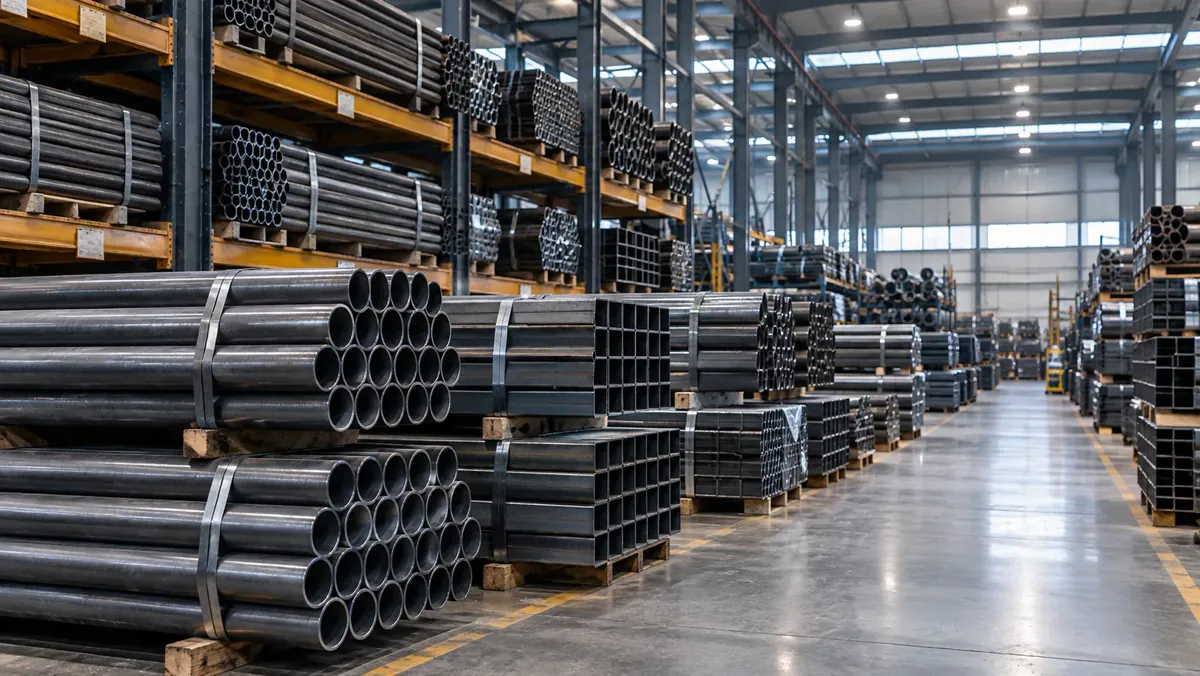
Q&T vs. Normalizing for 4130
Q&T provides higher strength than normalizing, but with trade-offs:
- Dimensional distortion from quenching can be significant for tubes — particularly for asymmetric shapes or uneven section sizes
- Q&T 4130 is more difficult to weld than normalised 4130 — higher preheat and careful technique are required
- The cost and lead time of Q&T is greater than normalizing
For most structural tube applications (roll cages, airframes), normalizing is the standard condition. Q&T is specified when the highest possible yield strength is required in the available cross-section — typically for machined components or specific industrial applications.
Ordering Q&T 4130 Tubing
Q&T condition must be specified explicitly on the purchase order. The required temper temperature or the target mechanical property range should also be stated where possible. Different tempering temperatures produce significantly different properties — a generic 'Q&T' specification without a target property range may result in material that does not meet the design intent.
| Parameter | Q&T 4130 Tubing |
|---|---|
| Condition code | Q&T or +QT |
| Process | Austenitise > quench > temper at controlled temperature |
| Strength | Higher than normalized — depends on temper temperature |
| Toughness | Lower than soft conditions — temper temp governs balance |
| Weldability | Reduced vs. normalised — preheat required |
| Distortion risk | Higher due to quenching — design for this |
| MTC requirement | Must state Q&T condition and tempering temperature range |
Practical Points for Tube
The tempering temperature sets the result: a low temper gives high strength and hardness with less toughness, a high temper gives lower strength with more toughness. The target is normally written as a hardness or tensile range, so specify that range instead of a process.
Two limits apply to tube. Thin-walled tube distorts when quenched, so long thin sections are difficult to treat without bowing. And a quenched and tempered part should not be welded afterwards without re-treatment, because welding destroys the properties locally. For these reasons the usual route is to machine the part from annealed or normalized tube, heat treat it, then finish it. Welded structures stay in the normalized condition. See annealed 4130 tubing for the starting material and mechanical properties for how condition affects strength.
Frequently Asked Questions
What strength can be achieved with Q&T 4130?
The achievable strength depends on the tempering temperature and the tube's section size (hardenability). Specific strength values depend on the applicable specification — consult the current ASTM A519 supplementary requirements or the applicable specification for stated property ranges. Do not use internet-sourced values without verifying against the MTC.
Can quenched and tempered 4130 be welded?
Welding locally removes the heat-treated properties. Parts are normally welded first and heat treated afterwards, or left in the normalized condition.
How should I specify the strength I need?
Give a hardness or tensile strength range. The heat treater selects the tempering temperature to achieve it.
Source Quenched and Tempered 4130 Tubing
Specify Q&T condition, target property range or temper temperature, OD, wall, and MTC.
- Condition: Q&T
- Target properties or temper temperature
- OD & Wall
- Standard
- Footage
- MTC confirming Q&T
- Delivery