
4130 Alloy Steel Tubing
4130 is classed as an alloy steel because chromium and molybdenum are added deliberately to change its properties. That classification affects how the tube is specified, certified and checked on arrival.
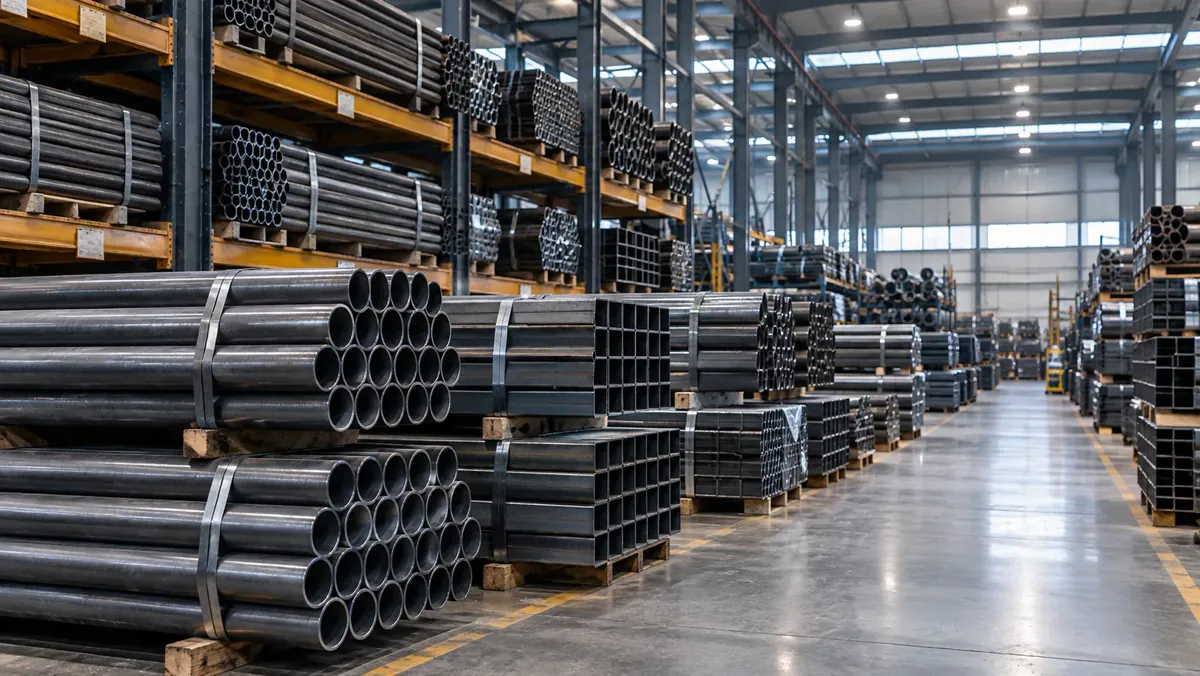
What 'Alloy Steel' Means for 4130
Alloy steels are defined by the deliberate addition of alloying elements beyond what is found in plain carbon steel. For 4130, the defining additions are chromium (approximately 0.80–1.10%) and molybdenum (approximately 0.15–0.25%), with manganese and silicon also present. These additions modify the steel's response to heat treatment, improve toughness, and increase hardenability — allowing higher strength to be achieved in section sizes where plain carbon steel would not respond adequately to quenching.
Procurement and Material Control Classification
In quality management systems (ISO 9001, AS9100), material control procedures classify incoming materials. 4130 tubing is classified as: alloy steel (not carbon steel), seamless (not welded), mechanical or structural tubing (not pipe). Correctly classifying the material in the procurement system avoids misidentification during receiving inspection or traceability audits.
| Classification Parameter | 4130 Alloy Steel Tubing |
|---|---|
| Material category | Alloy steel (low-alloy, Cr-Mo) |
| Product form | Seamless tubing |
| AISI/SAE grade | 4130 |
| UNS | G41300 |
| EN equivalent | 25CrMo4 / 1.7218 |
| Primary standard | ASTM A519 |
| Certification | EN 10204 3.1 MTC available |
| OD range (verified) | 0.25 in – 5.0 in |
| Wall range (verified) | 0.035 in – 0.500 in |
Confirming You Have Alloy Steel
4130 and plain carbon steel tube look identical. The ways to tell them apart are documentary and analytical, not visual.
- Marking. Tube is stencilled or tagged with the grade, size and heat number.
- Certificate. The mill test certificate shows the chromium and molybdenum contents for that heat.
- PMI testing. A handheld X-ray fluorescence analyser confirms chromium and molybdenum in seconds. It does not measure carbon, so it distinguishes alloy from carbon steel but not 4130 from 4140.
- Laboratory analysis. Optical emission spectrometry gives the full composition including carbon.
For safety-critical work, check the marking against the certificate at goods-in and consider PMI on a sample. More on the documents under mill test certificates and on testing under inspection and testing.
Frequently Asked Questions
How is alloy steel tubing different from carbon steel tubing?
Carbon steel tubing (e.g., ASTM A513 / 1020) contains no deliberate additions of chromium, molybdenum, or other significant alloying elements beyond what is present incidentally. Alloy steel tubing (e.g., 4130) has intentional chromium and molybdenum additions that increase hardenability and strength beyond what plain carbon steel can achieve.
Can I tell 4130 from mild steel by looking at it?
No. The two look the same. Use the marking, the certificate or a PMI test.
Does a PMI gun confirm the grade is 4130?
It confirms chromium and molybdenum are present at the right levels. Carbon needs a laboratory method.
Is the grade marked on 4130 tubing?
Tube is normally stencilled or tagged with the grade, size and heat number.
Request a Quotation for 4130 Alloy Steel Tubing
Specify grade, form, dimensions, standard, condition, and documentation for an accurate quotation.
- Grade: 4130 alloy steel
- Form: Seamless
- OD & Wall
- Standard
- Condition
- Footage
- MTC requirement
- Delivery