
4130 Tubing for Aircraft Frames
A welded 4130 fuselage is light, strong and repairable with simple equipment. How it is welded and how it is protected decide whether it lasts for decades, as many have.
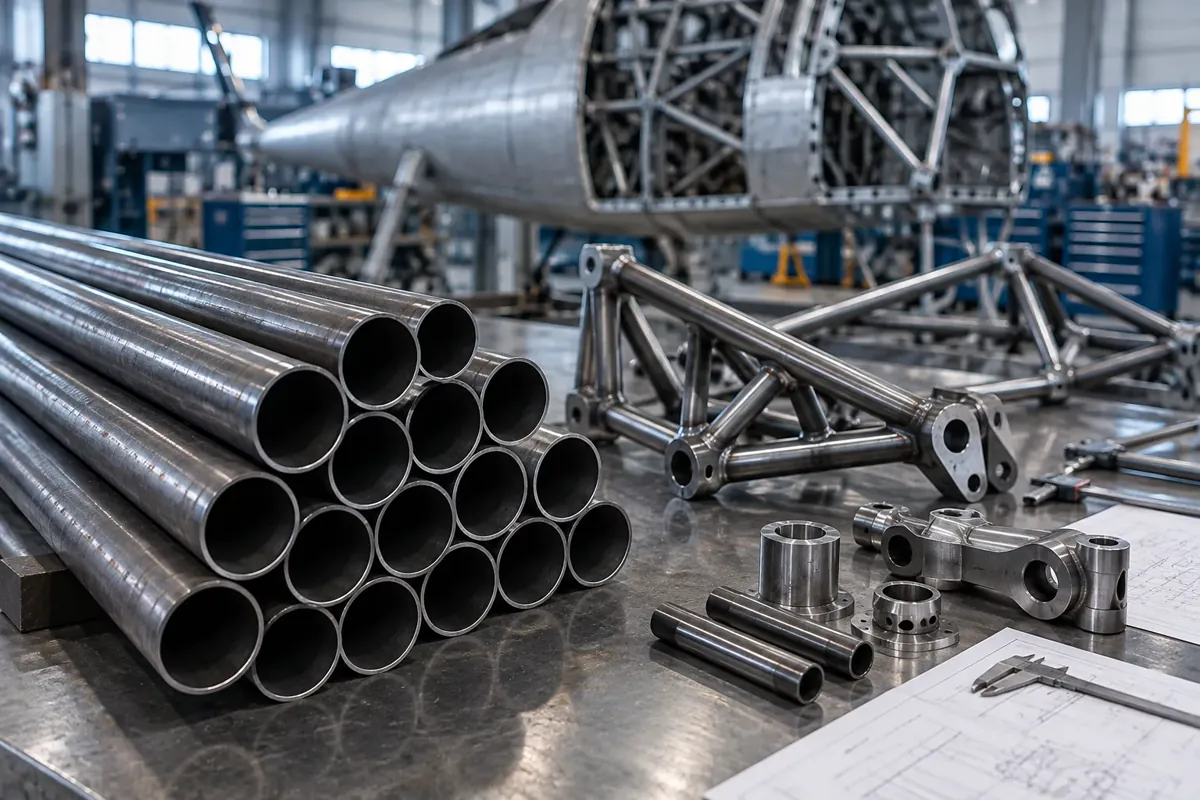
Why Tube Frame Aircraft Use 4130
For fabric-covered and some composite-covered aircraft, a welded steel tube fuselage is structurally efficient, repairable, and inspectable. 4130 normalized tube provides the yield strength needed to absorb landing loads, ground handling forces, and flight loads while keeping the structural weight fraction low. A steel tube frame can be inspected, repaired, and certified in the field — advantages over composite monocoque structures.
AMS-T-6736 Requirements for Aircraft Frame Tubing
AMS-T-6736 (Aircraft Structural Tubing, CRES, Chromium-Molybdenum Steel) defines the requirements for 4130 tube used in certificated aircraft. Key points:
- Condition: Normalized (mandatory — as-drawn material does not meet AMS-T-6736)
- Form: Seamless
- Grade: 4130 Cr-Mo alloy
- MTC: Must explicitly confirm AMS-T-6736 compliance and normalized condition
- Traceability: Heat number must be documentable
| Parameter | Aircraft Frame Tubing Requirement |
|---|---|
| Standard | AMS-T-6736 (certificated aircraft) |
| Condition | Normalized — mandatory; confirm on MTC |
| Form | Cold Drawn Seamless |
| MTC | EN 10204 3.1 confirming AMS-T-6736 and Normalized condition |
| Traceability | Heat number — essential for aircraft QA |
| OD range (verified) | 0.25 in – 5.0 in |
| Wall range (verified) | 0.035 in – 0.500 in |
For Experimental Aircraft
Experimental Amateur-Built (EAB) aircraft may use ASTM A519 CDS 4130 rather than AMS-T-6736, as permitted by EAB regulations. The builder-in-command makes this determination based on the design they are building. If following a manufacturer's plans, the plans specify the required material.
Welding and Protecting an Airframe
Two welding processes are used. Oxy-acetylene gas welding is the traditional method: it heats a wide area and cools slowly, which suits thin 4130 and leaves little residual stress. TIG welding is faster and more precise but puts heat into a small zone that cools quickly, so builders control heat input carefully and may warm the joint afterwards to reduce stress. Either process is acceptable when carried out to the procedure in the aircraft's design or repair data.
Corrosion protection works from both sides. Inside, closed tubes are traditionally flushed with a rust-inhibiting oil through small holes that are then sealed. Outside, the structure is cleaned, primed with a corrosion-resistant primer and painted. Areas that trap water, such as the lower longerons at the tail, deserve particular attention and regular inspection.
Material should be normalized seamless tube to the specification in the design data, with certification. See 4130 aircraft tubing and the size guide.
Frequently Asked Questions
Can I use as-drawn 4130 CDS for aircraft frame repairs?
For FAA-certificated aircraft, AC 43.13-1B directs the use of AMS-T-6736 normalized tubing for structural repair. As-drawn tube does not meet AMS-T-6736. Confirm requirements with an A&P mechanic or IA before procuring material for certified aircraft repairs.
Is gas welding still used on 4130 aircraft frames?
Yes. Oxy-acetylene welding remains an accepted method for thin 4130 airframe tubing.
How are aircraft frame tubes protected inside?
They are treated with a rust-inhibiting oil and the access holes are sealed.
Source 4130 for Aircraft Frame Construction
Specify AMS-T-6736, Normalized condition, OD/wall, footage, and MTC confirming compliance.
- Standard: AMS-T-6736
- Condition: Normalized
- OD & Wall sizes
- Total footage
- MTC confirming AMS and Normalized
- Delivery