
4130 Tubing for Aerospace Manufacturers
For an aerospace manufacturer, the moment tubing crosses the receiving dock is the point of greatest risk. Material accepted without proper checks can travel a long way into production before a problem surfaces.
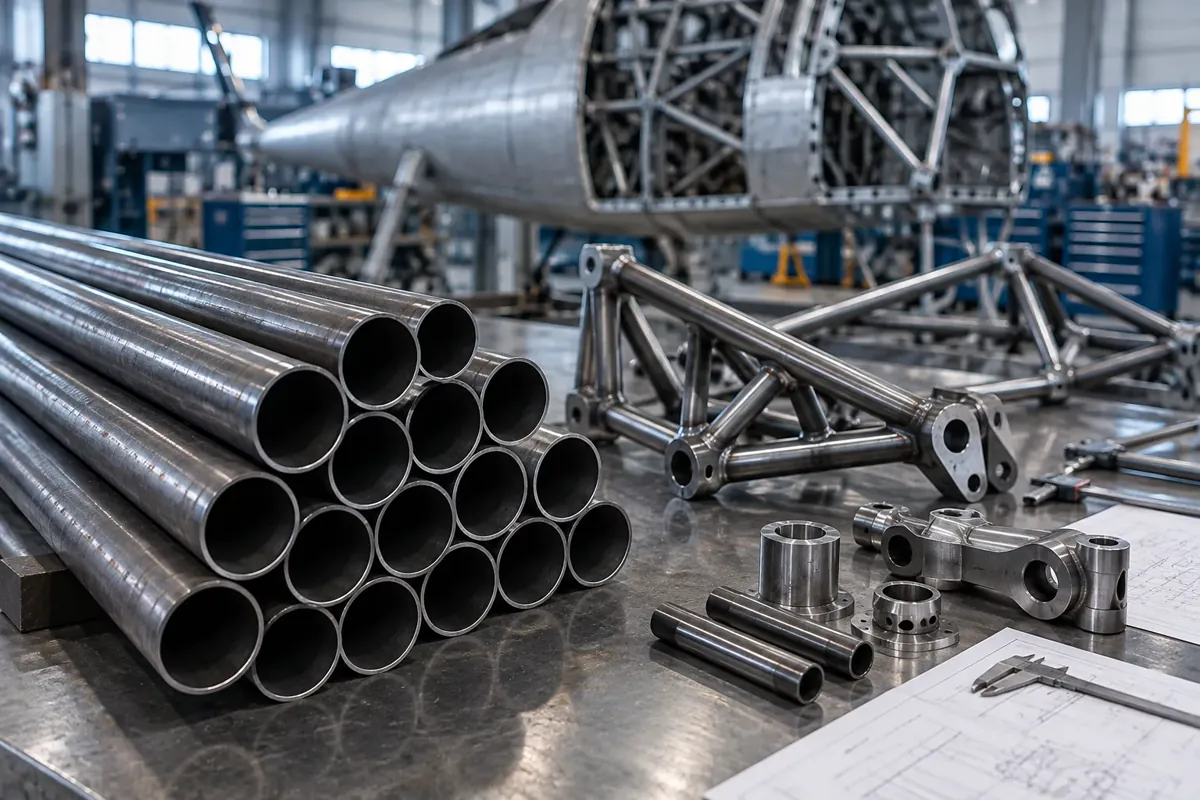
Supply Chain Requirements for Aerospace 4130
Aerospace manufacturer supply chain requirements for 4130 tubing include:
- Specification compliance: AMS-T-6736 (Condition N) for structural aircraft tube. ASTM A519 for ground equipment and non-flight structures.
- MTC completeness: Must show grade, heat number, specification compliance, condition, and test results.
- First Article Inspection (FAI): Some programmes require FAI documentation for first deliveries of a new part.
- Certificate of Conformance (CoC): In addition to MTC, a CoC signed by the supplier's quality representative may be required.
- Counterfeit material controls: Aerospace QSPs require controls to detect potentially counterfeit material. Sourcing from reputable, documented supply chains with full MTC traceability mitigates this risk.
Documentation Package
A complete documentation package for aerospace 4130 tubing supply may include:
- Purchase Order with full material specification
- Mill Test Certificate (EN 10204 3.1 or 3.2)
- Certificate of Conformance
- First Article documentation (if required)
- Packing List with quantity and heat lot identification
| Document | Content Required |
|---|---|
| MTC (EN 10204 3.1) | Grade, heat number, dimensions, chemical analysis, mechanical tests, condition |
| Certificate of Conformance | Supplier statement confirming compliance with PO specification |
| First Article (if required) | Dimensional and material verification against part drawing |
| Packing list | Quantity, sizes, heat lot numbers — enables traceability at receipt |
| CoC signature | Authorised quality representative — not just any company signatory |
Receiving and Controlling Aerospace Tubing
- Verify documents first. Check the certificate against the order for specification, revision, size, condition and quantity before the material is unpacked.
- Match identification. Confirm the heat or lot number on the tube agrees with the certificate.
- Inspect a sample. Measure dimensions and look for damage and corrosion.
- Verify the alloy. Use positive material identification where your procedures require it.
- Segregate by lot. Store each lot separately with its identity visible.
- Quarantine doubts. Hold anything with a discrepancy in a marked area until it is resolved.
Maintain identification through every operation. When tube is cut, transfer the lot number to each piece; when it is issued, record the lot against the work order. This chain is what allows a finished part to be traced to its raw material, and what auditors look for.
Buy from sources that provide full manufacturer documentation. See 4130 aerospace tubing and inspection and testing.
Frequently Asked Questions
What is the difference between MTC and Certificate of Conformance for aerospace?
The MTC (Mill Test Certificate) documents actual test results from the steel mill — chemical analysis, mechanical properties. The Certificate of Conformance (CoC) is a supplier declaration that the material meets the specified requirements. Aerospace quality plans often require both. The MTC provides evidence; the CoC provides the formal quality declaration.
What should be checked first when aerospace tubing arrives?
The documents: specification, revision, size, condition and quantity against the order.
Why segregate tubing by lot?
So that every part can be traced to a specific heat and any problem can be contained.
Aerospace Manufacturer 4130 Supply Enquiry
Provide your programme specification, AMS reference, required documentation package, and delivery requirements.
- Programme or part description
- Specification (AMS-T-6736 or other)
- OD & Wall
- Condition: Normalized
- Documentation: MTC 3.1/3.2, CoC, FAI
- Delivery schedule