
4130 Tubing Third Party Inspection
Third party inspection puts an independent inspector between the supplier and the buyer. For 4130 tubing it is used on projects where the client needs assurance beyond the manufacturer's own certificate.
When Third-Party Inspection is Required
TPI for 4130 tubing is typically required by:
- Defence programmes where independent material traceability is mandated
- Aerospace OEM programmes requiring EN 10204 3.2 (independently witnessed) certification
- High-consequence pressure system applications where the buyer's quality plan specifies source inspection
- Buyers who cannot audit the supplier's quality system directly and require independent assurance
For most industrial and motorsport applications, EN 10204 3.1 MTC is sufficient and TPI is not required.
What Third-Party Inspection Covers
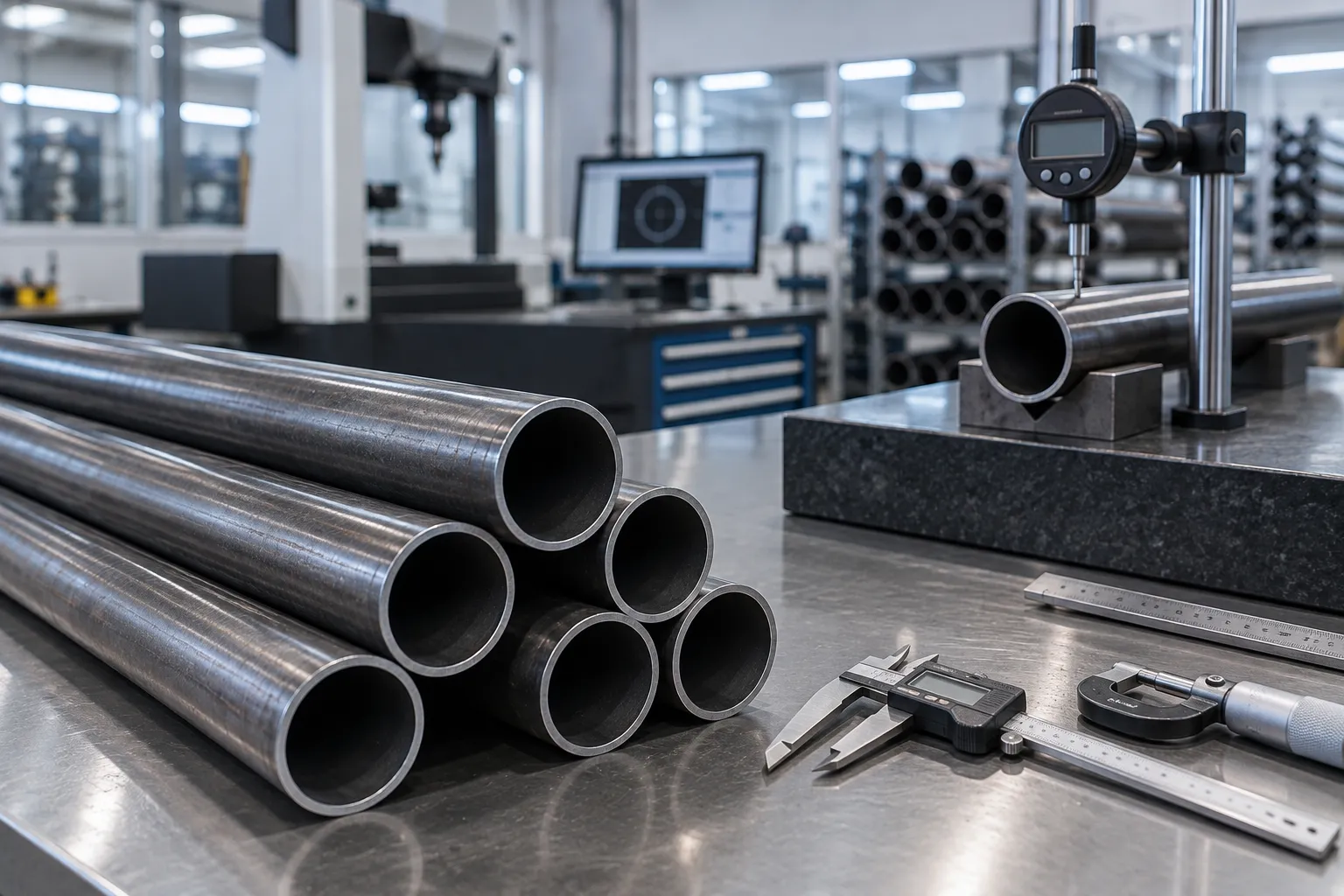
TPI may include: review of the mill's MTC and quality records; witnessing of mechanical testing at the mill; dimensional inspection of tube samples; verification of heat number traceability between tube and MTC; and production of an independent inspection report.
| TPI Activity | Purpose |
|---|---|
| MTC review | Verify specification compliance and completeness |
| Mechanical test witnessing | Independent confirmation of strength/elongation values |
| Dimensional inspection | Verify OD, wall, and surface against specification |
| Heat number verification | Confirm physical material matches MTC heat number |
| Inspection report | Independent record for buyer's quality file |
| EN 10204 3.2 signature | TPI signs the MTC as independent witness |
The Inspection and Test Plan
A formal inspection is run to an inspection and test plan agreed before work starts. The plan lists each activity and assigns the inspector a role at each one:
- Hold point. Work may not proceed until the inspector has attended and released it.
- Witness point. The inspector is notified and may attend; work continues if they do not.
- Review point. The inspector checks records afterwards.
Typical activities for tube are review of mill certificates, verification of marking and heat numbers, dimensional checks on a sample, witnessing of mechanical or non-destructive tests, and a final check of quantity, packing and marking before release.
To arrange an inspection, name the agency or ask for one to be proposed, send the plan or the scope, and allow time for the visit in the delivery schedule. Inspection costs are normally borne by the party requesting it. See inspection and testing and EN 10204 certificate types.
Frequently Asked Questions
Does TPI guarantee that the material is correct?
TPI provides independent verification at the point and scope of inspection. It significantly reduces the risk of non-conforming material. However, TPI is subject to the quality of the inspection body and the scope defined by the buyer — it is not an absolute guarantee.
How far in advance must TPI be arranged?
TPI must be arranged before the material is manufactured or shipped — retroactive TPI is not possible for witnessed testing. State the TPI requirement at the RFQ and purchase order stage to allow the supplier and inspection body to plan accordingly.
What is a hold point?
A stage at which work must stop until the inspector has attended and given release.
Enquire About Third-Party Inspection for 4130 Tubing
Specify your TPI requirement — inspection body preference, scope, and whether EN 10204 3.2 is required.
- Grade, Standard, OD, Wall
- TPI requirement (EN 10204 3.2 or scope)
- Preferred inspection body (if applicable)
- Programme or quality plan reference
- Delivery