
4130 Chromoly for Bellows Tubing
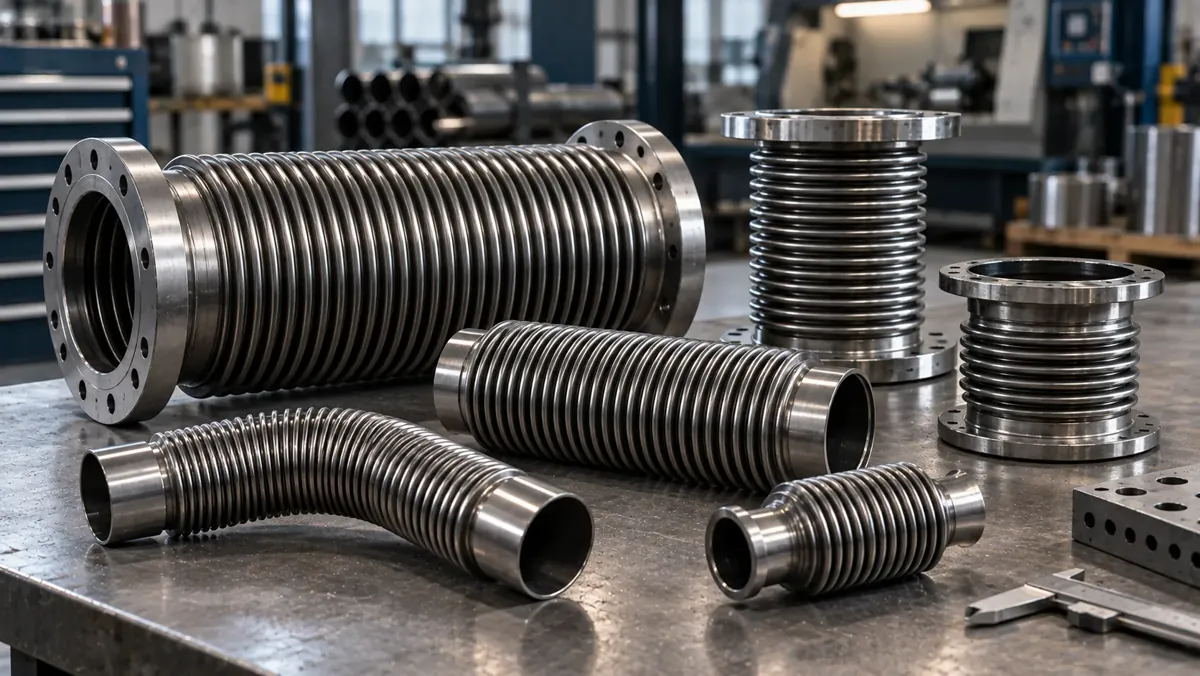
A metal bellows is a thin-walled tube formed into convolutions so that it can flex. It has to bend millions of times without cracking and usually has to resist corrosion, which points to materials other than 4130.
Is 4130 Suitable for Bellows Tubing?
Bellows are flexible corrugated tubes used to absorb thermal expansion or vibration in piping systems. They require materials with extremely high fatigue life and formability, typically specialized stainless steels or Inconel.
4130 is a rigid structural mechanical tube. It is not manufactured in a corrugated bellows form. Attempting to hydroform high-strength 4130 into a bellows profile is generally impractical compared to using alloys designed specifically for flexible joint applications.
What Bellows Are Made From
Bellows are hydroformed or roll-formed from very thin tube, or built from welded diaphragms. The material must be ductile enough to form deep convolutions and must resist fatigue and the process fluid.
| Material | Typical bellows use |
|---|---|
| Austenitic stainless such as 321 and 316L | General expansion joints and flexible connections |
| Nickel alloys such as alloy 625 | High temperature and corrosive service |
| Bronze and other copper alloys | Instruments and low-pressure controls |
4130 is not supplied in the thin gauges used for bellows, hardens when cold formed and has no corrosion resistance. It is, however, a sensible material for the rigid parts of a bellows assembly, such as end fittings, guide tubes and machined collars, where strength matters. Thin 4130 tube for other purposes is described under thin wall tubing.
What a Bellows Enquiry Needs
If you are buying a bellows, the manufacturer will ask for the inside diameter, the movement required in each direction, the working pressure and temperature, the fluid, the number of cycles expected and the end connections. From these they select the material, the wall and the number of convolutions. Tube stock does not come into it; the bellows is a designed component.
Frequently Asked Questions
Are bellows made from 4130 steel?
Not normally. Bellows are formed from thin stainless steel, nickel alloy or copper alloy tube.
Can 4130 be used for bellows end fittings?
Yes. Rigid fittings and guide tubes are a reasonable use, provided they are protected from corrosion.
What is the thinnest wall in 4130 tubing?
Regular supply starts at about 0.035". Bellows use far thinner material than this.
Who should I ask for a metal bellows?
A bellows or expansion joint manufacturer, giving the size, movement, pressure, temperature and fluid.
Why does bellows material need high fatigue resistance?
A bellows flexes every time the system moves, so its wall is stressed repeatedly throughout its life.
Can thin 4130 tube be hydroformed?
It has limited formability compared with austenitic stainless and is not made in bellows gauges.
Enquire for 4130 Mechanical Tubing
If your engineering assessment confirms 4130 mechanical tubing is suitable for your application, provide your OD and wall requirements.
- OD & Wall
- Standard (ASTM A519)
- Application description
- MTC requirement