
4130 Chromoly for Exhaust Tubing
Exhaust tubing has to survive heat, vibration and corrosion from the inside and outside. 4130 is strong but it is not a heat or corrosion resisting steel, so it is not the usual material for the exhaust pipe itself.
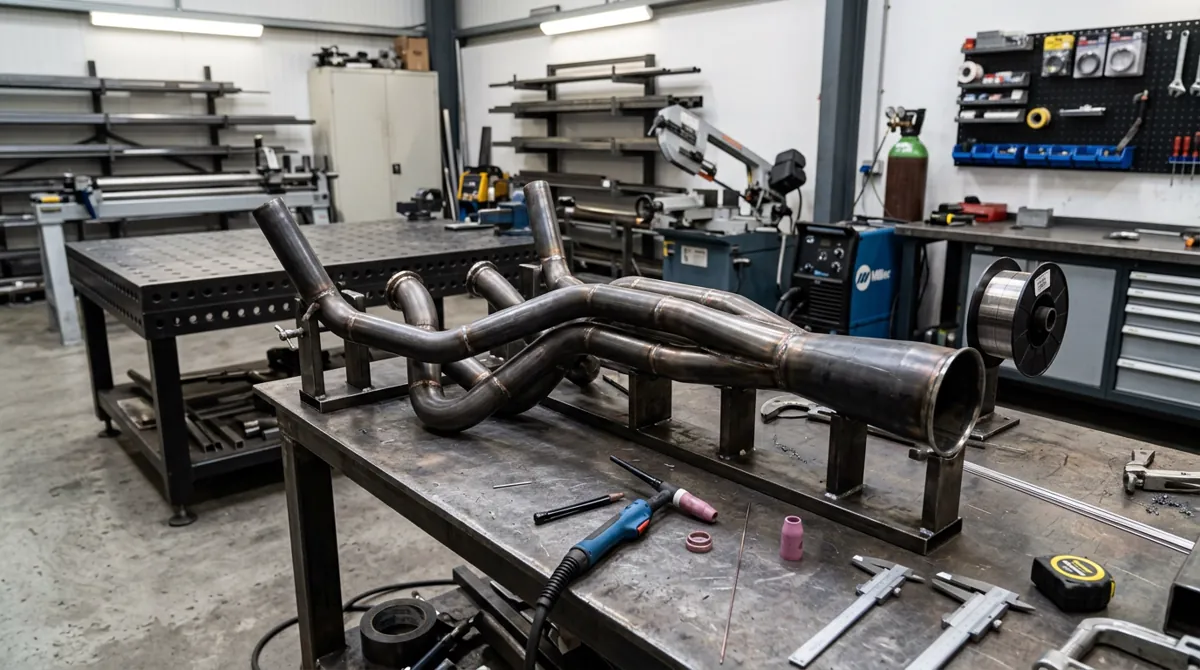
Is 4130 Suitable for Exhaust Tubing?
Vehicle exhaust systems experience high temperatures, corrosive exhaust gases, and external moisture. The industry standards for exhaust tubing are 304, 321, or 409 stainless steels, or Inconel for high-performance headers.
While 4130 has the high-temperature strength for exhaust headers, it lacks the corrosion resistance required to survive exhaust gas condensation and external environments. 4130 exhaust headers will rust quickly unless treated with a high-temperature ceramic coating. Stainless steel remains the superior choice for exhaust fabrication.
What to Specify for Exhaust Systems
Exhaust gas is hot enough to oxidise plain and low alloy steels, and condensate attacks them when the system cools. Production exhausts use coated or stainless steels for that reason, and racing headers use stabilised stainless or nickel alloys.
| Material | Typical exhaust use |
|---|---|
| Mild or aluminised steel | Economy and general road systems |
| Ferritic stainless such as 409 | Production road systems |
| Austenitic stainless such as 304 and 321 | Performance systems and headers |
| Nickel alloys such as alloy 625 | Very high temperature racing exhausts |
Where 4130 does belong is in the structure around the exhaust: hangers, brackets, braces and chassis members that carry the system. If you need round tube for mounts, see the size chart.
Why Heat Cycling Is Hard on Low Alloy Steel
An exhaust heats rapidly every time the engine starts and cools when it stops. Each cycle expands and contracts the metal, and joints and bends concentrate the resulting strain. A hardenable steel such as 4130 can form hard zones beside welds that do not tolerate this well, while its surface scales a little more with every cycle. Stainless grades used for exhausts are chosen because they stay ductile and form a protective oxide.
Frequently Asked Questions
Can I build exhaust headers from 4130?
It is not recommended. 4130 scales at exhaust temperatures and is prone to cracking from thermal cycling. Stainless steels are the normal choice.
Does 4130 rust in an exhaust system?
Yes. It has no meaningful corrosion resistance and needs a coating even in dry service.
Is 4130 suitable for exhaust hangers and brackets?
Yes. Its strength suits brackets and supports, provided they are protected from corrosion.
Is mild steel or 4130 better for an exhaust?
Neither resists heat and corrosion well. Mild steel is cheaper and more forgiving; stainless is the durable choice.
Enquire for 4130 Mechanical Tubing
If your engineering assessment confirms 4130 mechanical tubing is suitable for your application, provide your OD and wall requirements.
- OD & Wall
- Standard (ASTM A519)
- Application description
- MTC requirement