
4130 Chromoly for Heat Resistant Tubing
4130 is sometimes assumed to be heat resistant because it contains chromium and molybdenum. Those elements are there to improve strength and hardenability, not to resist high temperatures.
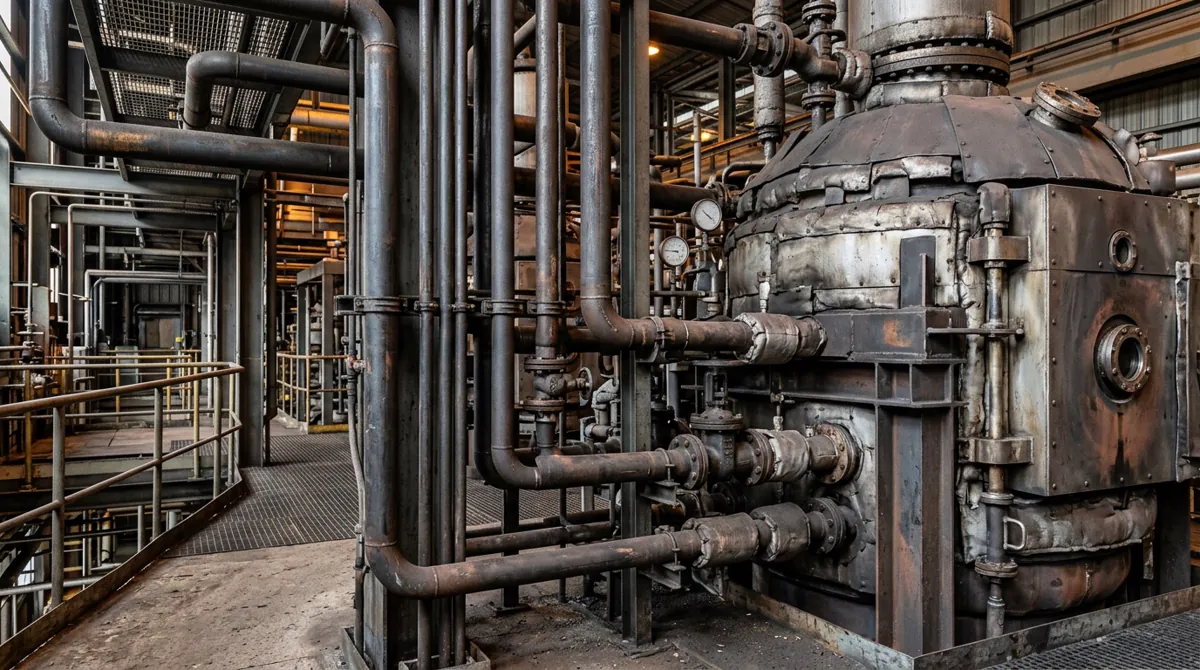
Is 4130 Suitable for Heat Resistant Tubing?
True heat-resistant tubing (for sustained use above 600°C) relies on high chromium and nickel content to resist scaling and creep. Standard heat-resistant alloys include 310S stainless, Incoloy, and Inconel.
4130 is not a heat-resistant alloy. As a low-alloy carbon steel, its strength drops off significantly at elevated temperatures, and it will rapidly scale and oxidize if exposed to sustained high heat. It should not be specified for high-temperature service without a formal engineering assessment of its elevated-temperature stress limits.
How 4130 Behaves as Temperature Rises
Like all low alloy steels, 4130 loses strength progressively as it gets hotter, and heat-treated material begins to soften once the service temperature approaches its tempering temperature. At higher temperatures still it oxidises and scales, because about 1 percent chromium is not enough to form a protective film. It is designed for structural use at ordinary temperatures, with occasional moderate warmth, not for continuous hot service.
What to Specify for Hot Service
| Service condition | Materials normally used |
|---|---|
| Pressure parts at elevated temperature | Cr-Mo boiler and pipe grades such as T11, T22, P11, P22 |
| Oxidising atmospheres at high temperature | Heat-resistant stainless steels such as 309 and 310 |
| Furnace components | Nickel-chromium and cast heat-resistant alloys |
Specific cases are assessed on the pages for boiler tubing, radiant tubing and exhaust tubing. Room-temperature properties are given under mechanical properties.
Questions to Settle Before Choosing a Material
For any hot application, establish the maximum metal temperature, whether it is continuous or occasional, the atmosphere the tube sits in, and whether the tube carries pressure or structural load. A short, occasional exposure in clean air is a very different case from years of continuous service in combustion gas. With those facts, a materials engineer can select from carbon steel, low alloy creep-resisting grades, stainless or nickel alloys.
Frequently Asked Questions
Is 4130 a heat-resistant steel?
No. It is a structural low alloy steel. It is not designed for continuous high-temperature service.
Does heating weaken heat-treated 4130?
Yes. Heating towards or above its tempering temperature reduces the strength gained from heat treatment.
What is the difference between 4130 and boiler Cr-Mo grades?
Boiler grades have lower carbon and are made and tested to pressure standards with allowable stresses at temperature. 4130 is a mechanical tubing grade.
What makes a steel heat resistant?
High chromium for oxidation resistance, plus elements such as nickel and molybdenum for strength at temperature.
Can 4130 be used for occasional moderate heat?
It tolerates moderate warmth, but it should not be selected for continuous high-temperature service.
Enquire for 4130 Mechanical Tubing
If your engineering assessment confirms 4130 mechanical tubing is suitable for your application, provide your OD and wall requirements.
- OD & Wall
- Standard (ASTM A519)
- Application description
- MTC requirement