
4130 Chromoly for Marine Tubing
Salt water is the hardest common environment for steel. 4130 is a strong structural alloy, but it corrodes about as readily as mild steel, so marine use depends entirely on how well it is protected.
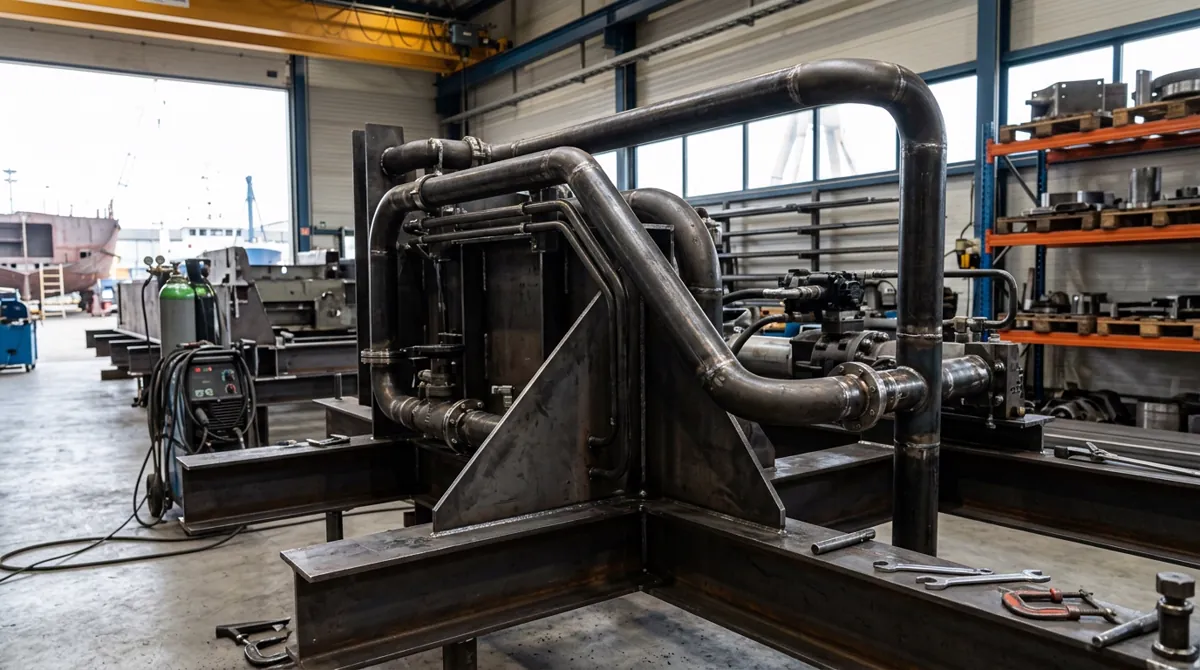
Is 4130 Suitable for Marine Tubing?
Marine environments are highly corrosive. Tubing exposed to salt spray or submerged in seawater must be manufactured from corrosion-resistant alloys like 316L stainless steel, duplex stainless, or copper-nickel alloys.
4130 chromoly contains no significant nickel and only ~1% chromium — it is not a stainless steel. In a marine environment, bare 4130 will rust immediately and aggressively. If 4130 must be used in a marine application for its structural strength, it requires comprehensive barrier coating (epoxy, paint, or plating) to survive.
Using 4130 in a Marine Environment
If the strength of 4130 is needed, for example in a rigging component, a trailer or a racing boat structure, the tube has to be sealed and coated. That means a properly prepared paint or powder system, protection inside closed tubes against trapped moisture, and regular inspection. Any break in the coating becomes a rust site.
For tube that will be wetted continuously, a corrosion-resistant material is usually the better engineering choice.
| Material | Marine suitability |
|---|---|
| 4130 alloy steel | High strength, needs complete coating and maintenance |
| 316 stainless steel | Good general resistance, common for deck hardware |
| Duplex stainless steel | High strength with better resistance to sea water |
| Marine aluminium alloys | Light, widely used for structures and rails |
The same reasoning applies to other wet duties such as condenser tubing.
Coating a 4130 Structure for Marine Use
If 4130 is used near salt water, the coating system is part of the design. Blast-clean the steel, apply a zinc-rich or epoxy primer promptly, then build up the specified top coats. Seal tube ends and treat closed sections internally. Avoid crevices and fasteners that trap water, and isolate the steel from stainless or aluminium fittings to prevent galvanic attack.
Frequently Asked Questions
Does 4130 resist salt water corrosion?
No. Its chromium content is too low to give corrosion resistance. It must be coated and maintained.
Can 4130 be galvanised or plated for marine use?
Coatings can be applied, but some plating processes risk hydrogen embrittlement in high-strength steel. Take specialist advice on the coating process.
Is stainless steel stronger than 4130?
Common austenitic stainless grades are weaker than heat-treated 4130. Duplex stainless grades offer higher strength with corrosion resistance.
Can 4130 touch stainless or aluminium fittings in a marine structure?
Dissimilar metals should be electrically isolated, since contact in salt water accelerates corrosion.
Enquire for 4130 Mechanical Tubing
If your engineering assessment confirms 4130 mechanical tubing is suitable for your application, provide your OD and wall requirements.
- OD & Wall
- Standard (ASTM A519)
- Application description
- MTC requirement