
4130 Tubing for Car Chassis
A 4130 chassis for a road car, kit car or restomod lives a different life from a race chassis. It has to pass registration requirements, survive weather and stay sound for decades.
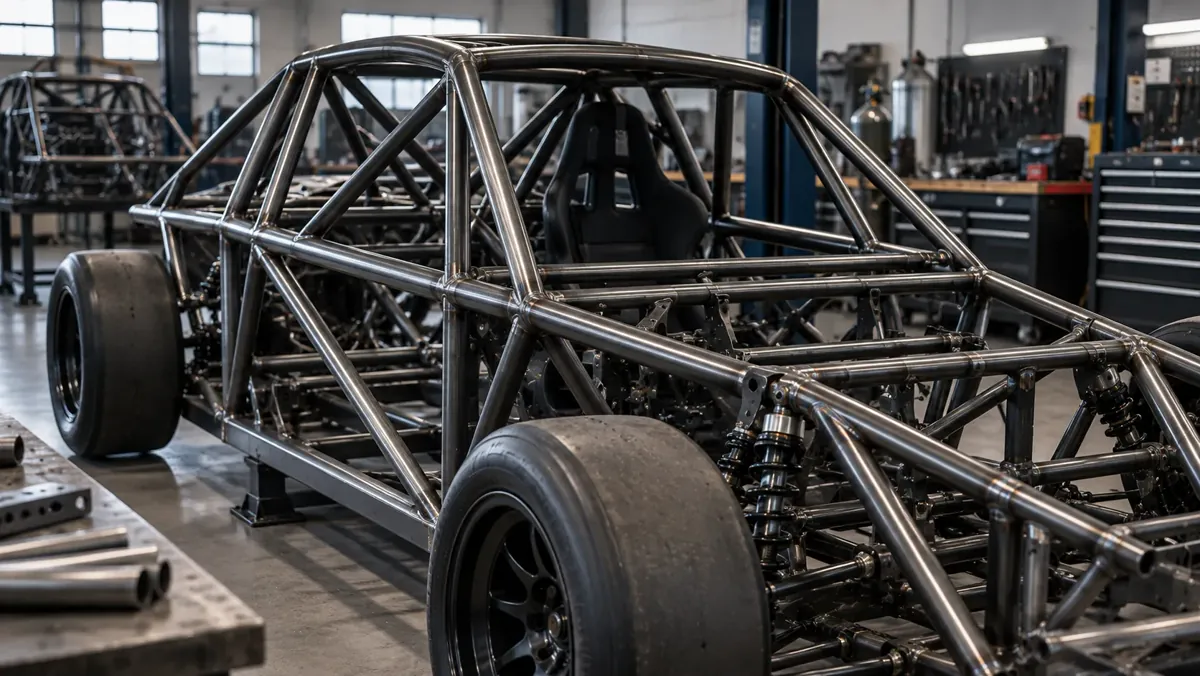
Custom and Kit Car Context
Custom car builders and kit car fabricators choose 4130 for its higher yield strength — which allows lighter tube for the same structural requirement compared to mild steel. The trade-off is weld skill requirement: 4130 benefits from TIG welding by a skilled operator, particularly at highly-stressed joint areas. MIG welding is possible but requires appropriate wire and technique.
For road-legal vehicles, the chassis must meet the applicable road vehicle regulations in the jurisdiction (e.g., SVA/IVA in the UK, state vehicle inspection in the US). These regulations do not typically specify 4130, but the builder's structural analysis must demonstrate that the chassis is adequate.
Tube Sizing for Custom Chassis
Custom chassis tube sizing is a structural engineering task. General reference: main frame rails in a lightweight custom car often use 1.5"–2.0" OD square or round section; body structure uses smaller diameter round tube. However, these are starting points — a proper chassis requires load analysis.
| Parameter | Custom Car Chassis Consideration |
|---|---|
| Grade | 4130 for weight saving; mild steel for simpler welding |
| Form | CDS for 4130; ERW DOM acceptable for mild steel sections |
| Weld process | TIG recommended for 4130 |
| Structural analysis | Required — consult chassis engineer |
| Road legality | Check applicable vehicle regulations in your jurisdiction |
| MTC | Retain for build documentation — required for some inspection authorities |
Building a Chassis for Road Use
Many jurisdictions require a custom or modified chassis to be assessed by an engineer or inspection authority before registration. Find out early what evidence is needed. Material certificates, a record of tube sizes and photographs of welds before painting are commonly requested, and they are easy to collect during the build and hard to produce afterwards.
Corrosion is the long-term threat. 4130 rusts like any carbon steel, and road salt and water find every gap. Seal tube ends, provide drain holes where water could collect, and treat the inside of closed tubes with a cavity wax or inhibitor. Paint or powder coat over a sound primer, and recoat any area damaged by later work.
Think about inspection too. Leave access to key welds and mounting points so they can be checked during the car's life. Tube selection is covered under 4130 chassis tubing, and welding practice in the welding guide.
Frequently Asked Questions
Can I MIG weld 4130 for a custom car chassis?
MIG (GMAW) welding is possible for 4130 using appropriate wire and technique. However, TIG (GTAW) is preferred for structural joints because it provides better control of heat input and produces higher-quality welds in thin-wall 4130 tubing. For safety-critical chassis joints, TIG welding by a skilled operator is recommended.
Does a 4130 road car chassis need approval?
In many places a custom chassis must be assessed before registration. Check the requirements where the car will be registered.
How do I stop a 4130 chassis rusting?
Seal and treat the inside of tubes, prime and coat the outside, and repair the coating wherever it is damaged.
Source 4130 for Custom Car Chassis
Provide your chassis tube requirements — sizes, footage, and any custom cut requirements.
- OD & Wall sizes
- Footage per size
- Cut requirements
- MTC requirement
- Delivery